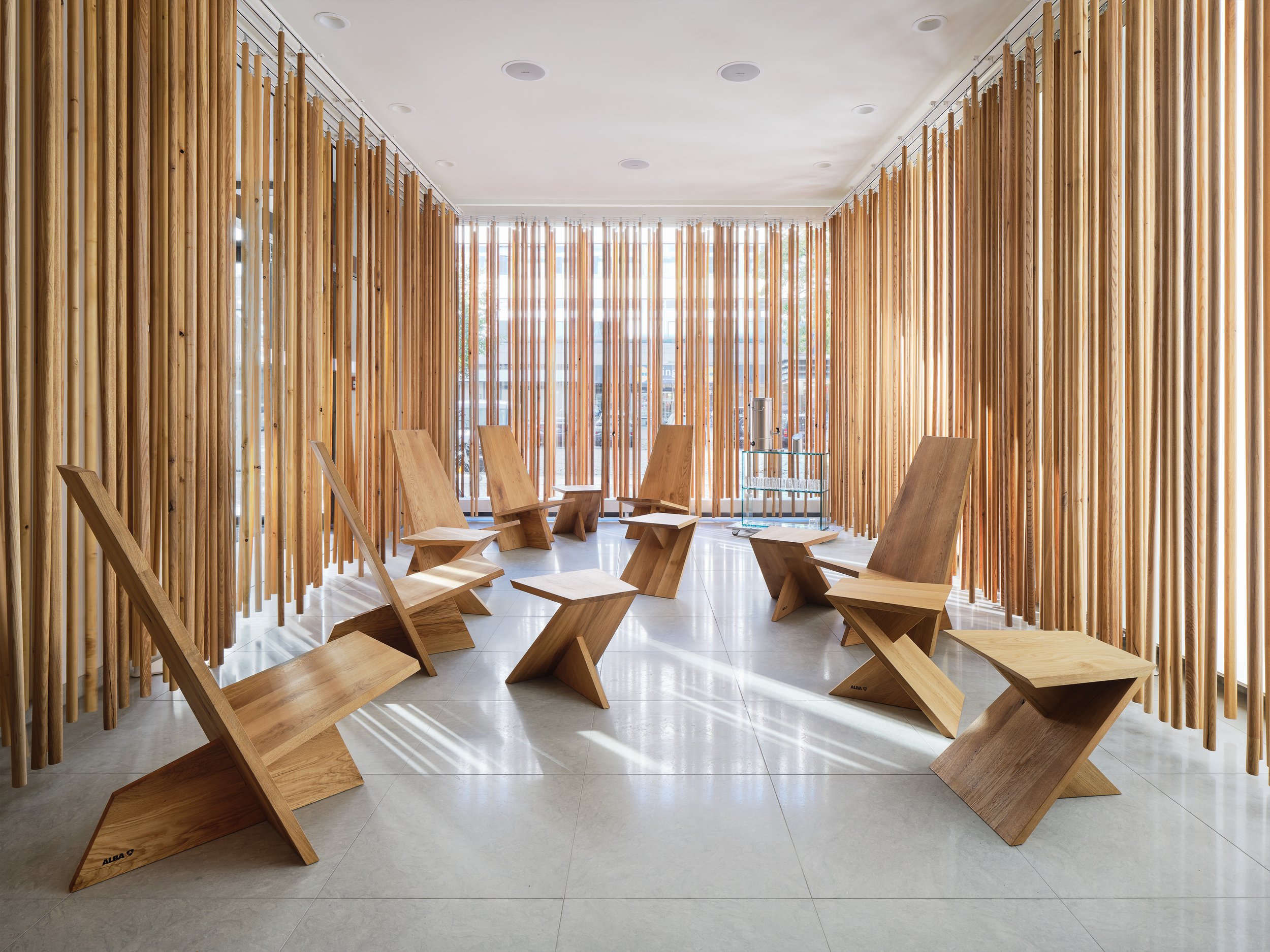
ALBA HQ, Berlin, Germany, 2024
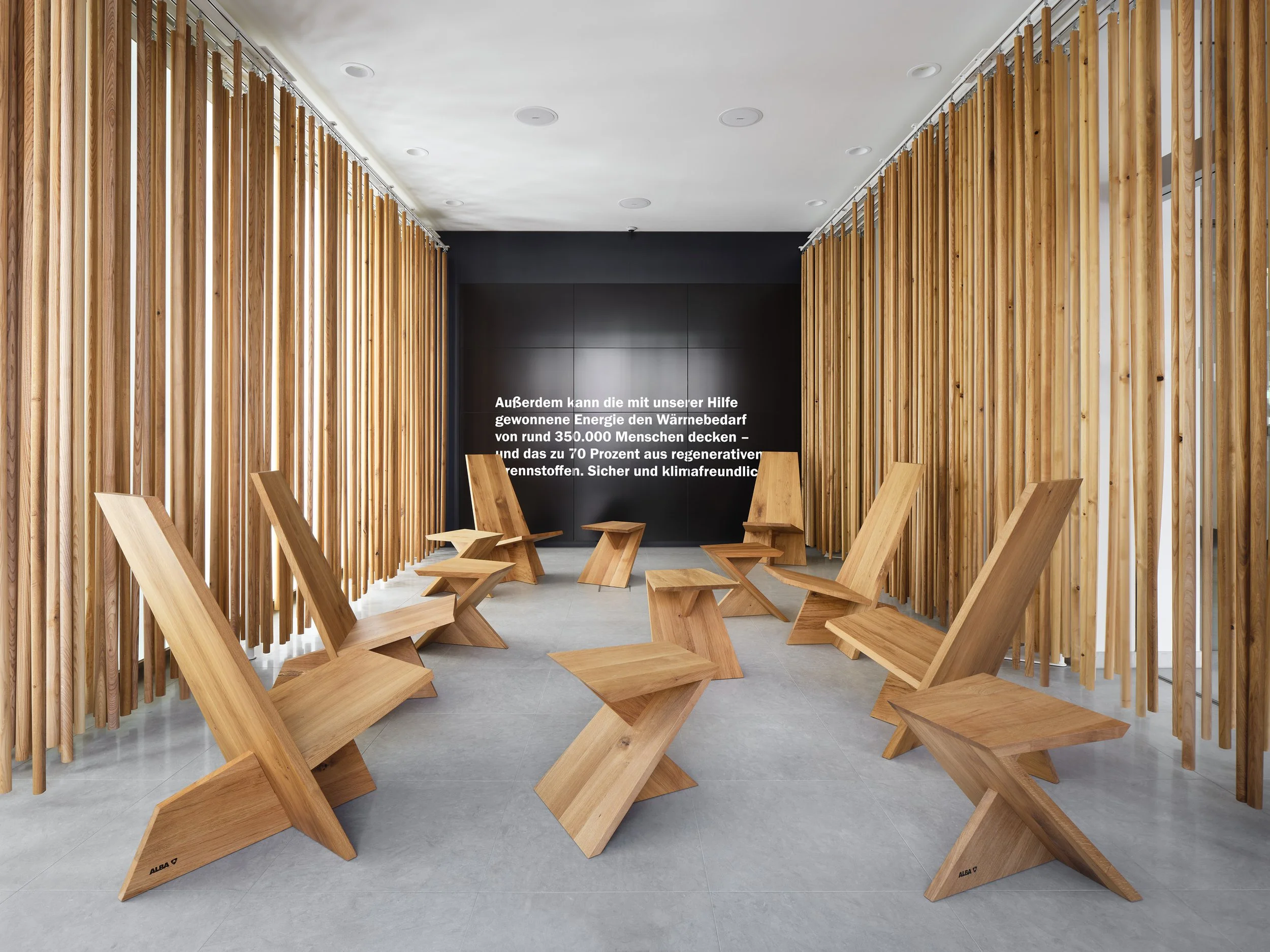
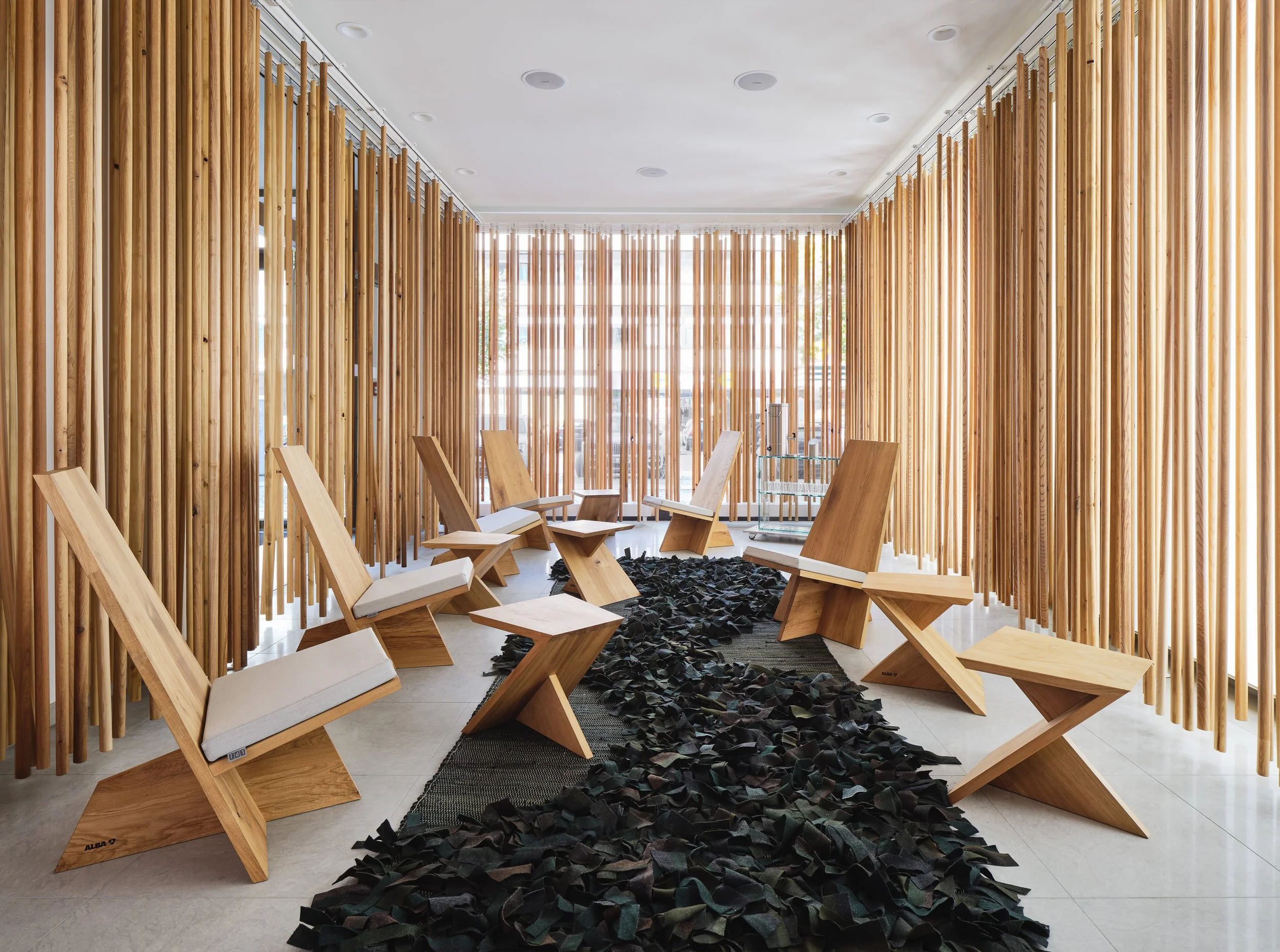
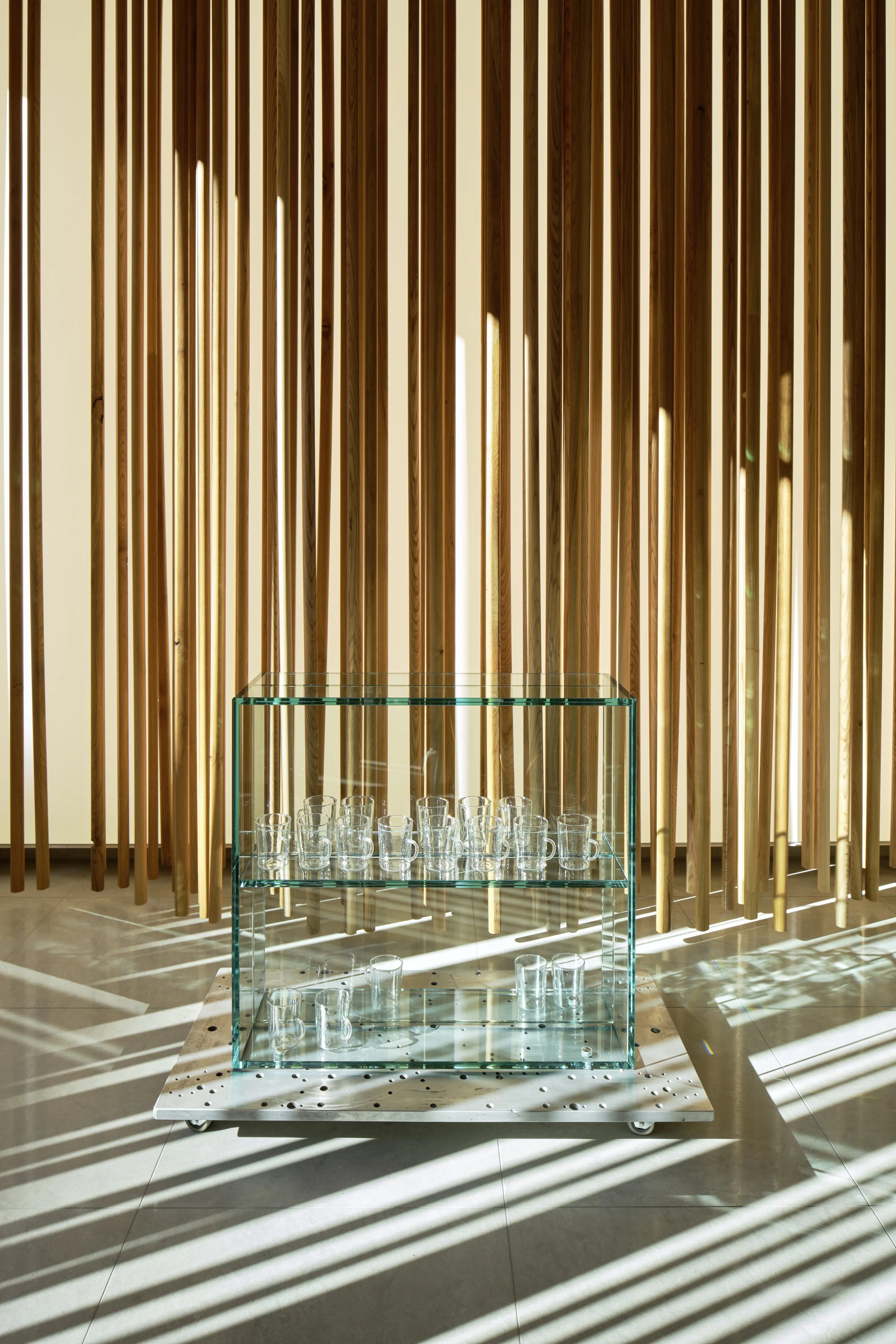

Design: Peter Heimer und BUCHHOLZBERLIN
Photography: Achim Hatzius und Katja Buchholz
As part of a reorientation of the internal corporate culture, the public areas of the ALBA headquarters in Berlin were redesigned by BUCHHOLZBERLIN and Peter Heimer. The overarching theme was the preservation of nature through circular economy, reuse and recycling.
The showroom on the ground floor of the ALBA headquarters was converted into the ALBA Lounge, a lounge and event venue for all employees and customers. The reception area was optimised. On the 8th floor, the conference room was upgraded and the previously underused roof terrace was redesigned into an outdoor meeting space with a picking garden for all employees.
We are the Future
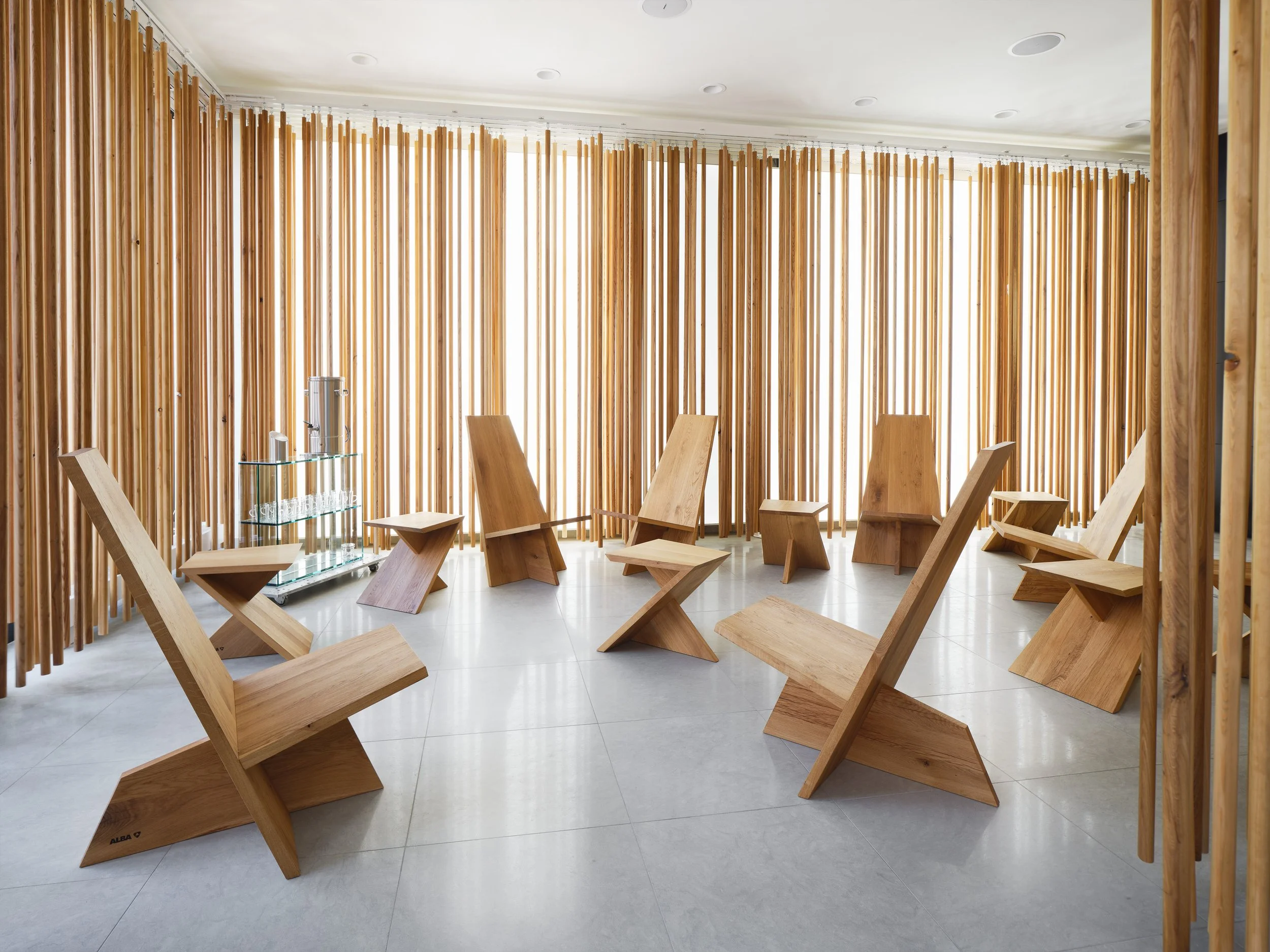
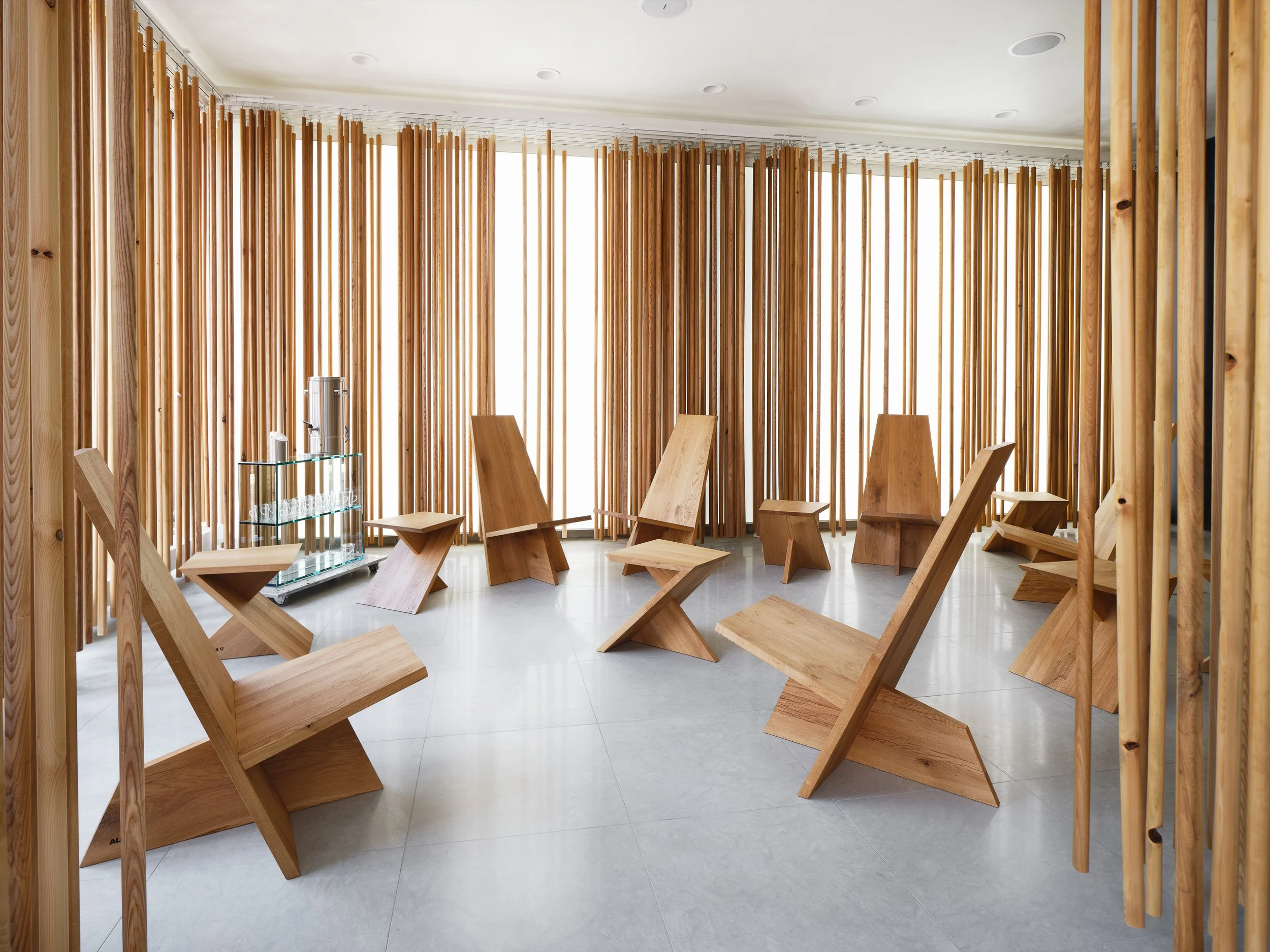
This claim by ALBA is the thematic starting point. ALBA's raw material processing enables a circular economy that conserves resources and helps to keep the earth untouched. BUCHHOLZBERLIN and Peter Heimer focus on the theme of untouched nature for the ALBA Lounge and create the atmosphere of a sunlit forest clearing. The design idea of the ‘Forest Curtain’ emerges, a curtain made of recycled wood as a permeable room envelope.
Changing Atmospheres
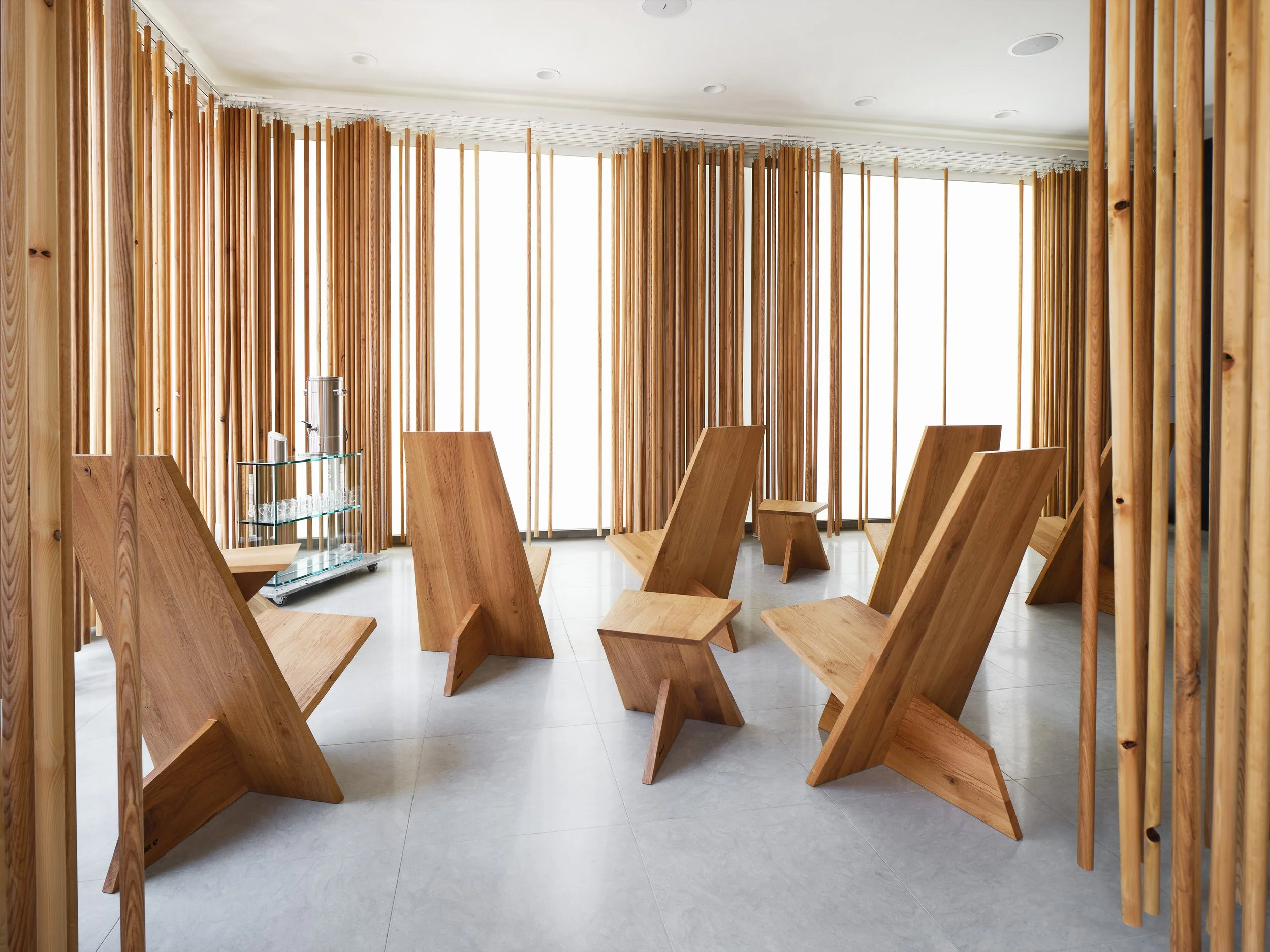
The light sources behind the ‘Forest Curtain’ are daylight in the form of a wall-sized window facing the street and an LED light wall. The 660 wooden slats hang on six rails and can be moved, compressed and expanded individually by the visitors. The changing light and the movement of the wooden slats generate a changing atmosphere – analogous to nature. The wooden rods made of recycled oak, spruce and ash wood were hand-turned by a social workshop.
Healing and Wellbeing
The daylight modulation of the LED light wall behind the movable ‘tree trunks’ is controlled by the ‘Human Centric Lighting’ computer programme, which simulates room lighting moods identical to daylight, changing every minute. Human Centric Lighting mimics the rhythm of daylight and has physiologically and biologically proven positive effects on humans. In addition to this programming, the light intensity can also be set to a constant 6500 Kelvin for light therapy.
Two light settings are available: a minute-by-minute change in light, modeled on the rhythm of daylight, from sunrise to midday sun to sunset, or a fixed light setting of 6500 Kelvin, which is the maximum and corresponds to light therapy.
When using the lamp for light therapy, the wooden sticks should be pushed aside so that you can look directly into the light.
Nature / Corporate Culture
The atmosphere of the ALBA Lounge invites visitors and employees to linger or enjoy a light therapy session. The ‘Forest Curtain’ is a kind of frame that can accommodate the complexity of the ever-changing needs of visitors and employees.
Embrace the Existing
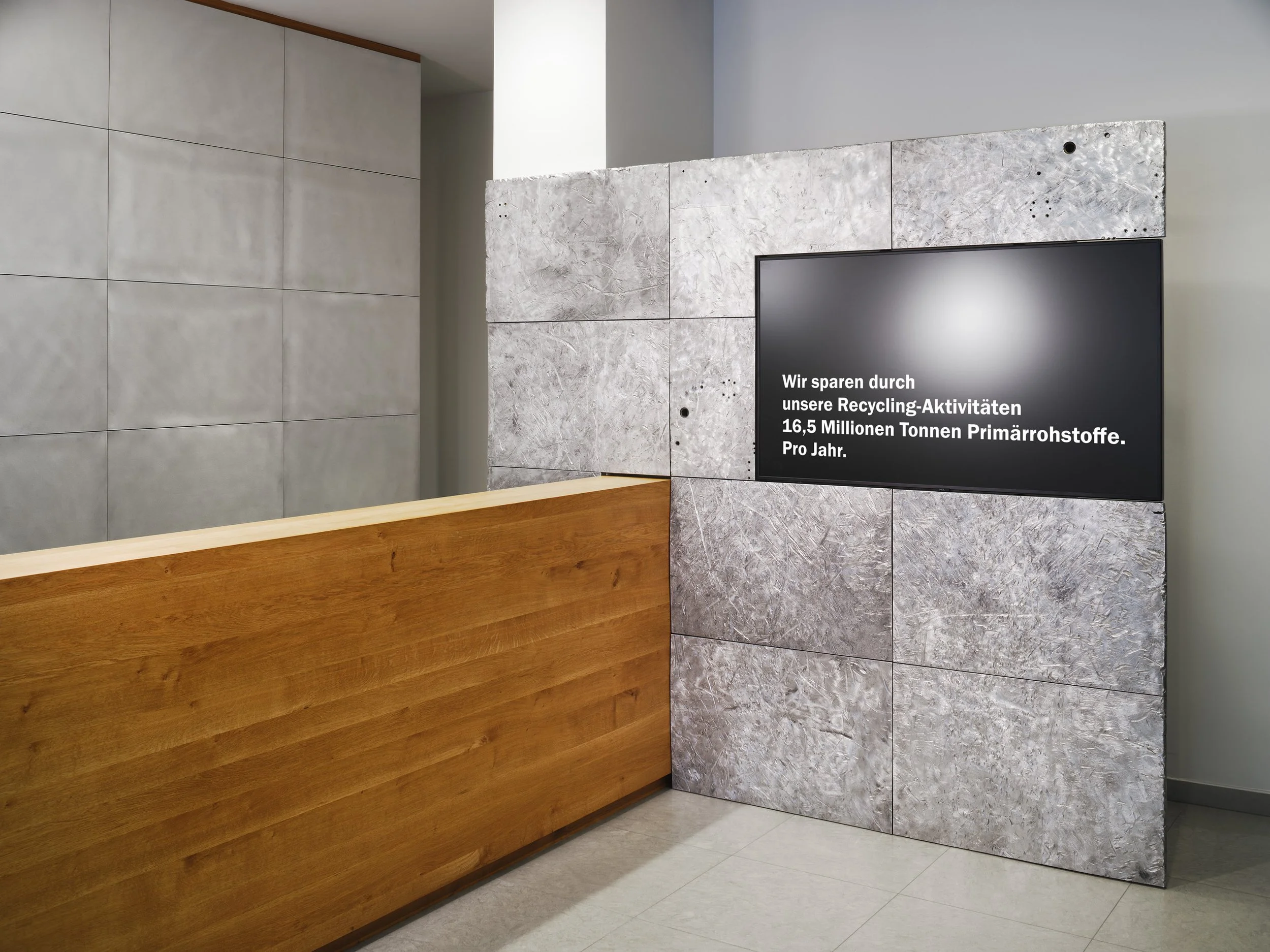
The design approach is minimally invasive. As much of the existing inventory as possible is left in place and recontextualised with selected new additions. The screen wall that already existed at this location prior to the project is reimagined: changing messages provide information about ALBA's recycling activities in short slogans. Exclusively for ALBA, a simple but comfortable armchair made of recycled oak has been created, inviting visitors to linger and enjoy the sunshine. This is complemented by side tables that can also be used as stools or benches. The furniture is accentuated by a minimalist, rollable glass tea bar on a recycled aluminium base from the ALBA recycling centre. A custom-made carpet made of recycled loden fabric, hand-woven by weavers in the Allgäu region, simulates the forest floor. It was developed in collaboration with the Aschau-based recycling label LPJ.
Recycle, Think in Terms of Available Materials
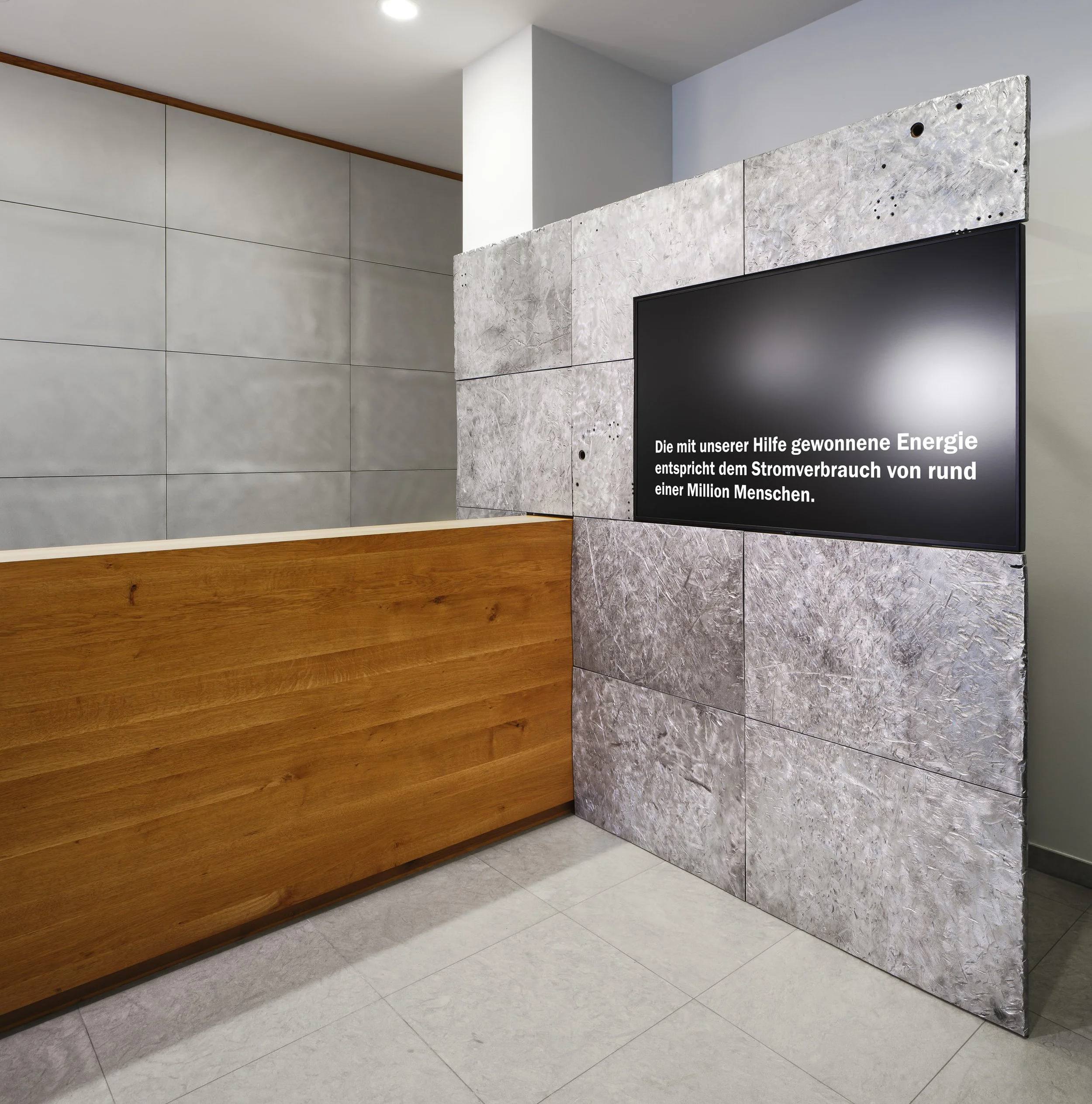
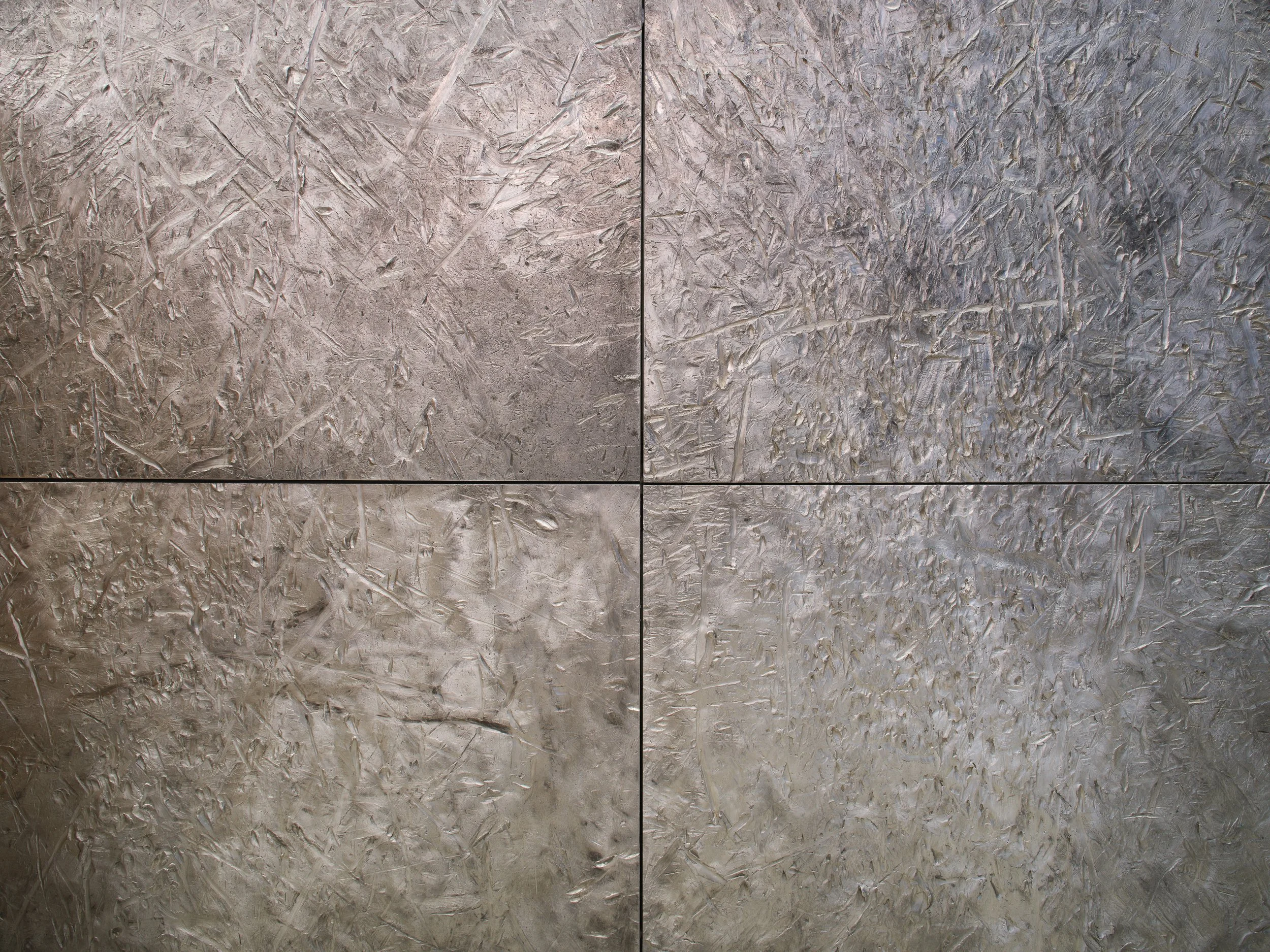
The reception lobby mainly displays recycled metal, the main raw material used by ALBA Aufbereitung. The heavy aluminium panels of the display wall were previously used as sweeping plates for scrap metal at the ALBA recycling centre. Behind it is a guest cloakroom. The reception desk is made of recycled oak. Its backdrop is a wall made of recycled aluminium printing plates from ALBA. Indirect lighting on the aluminium wall transforms the recessed counter area into a light-reflecting space.
Outdoor Room, the Roof Garden
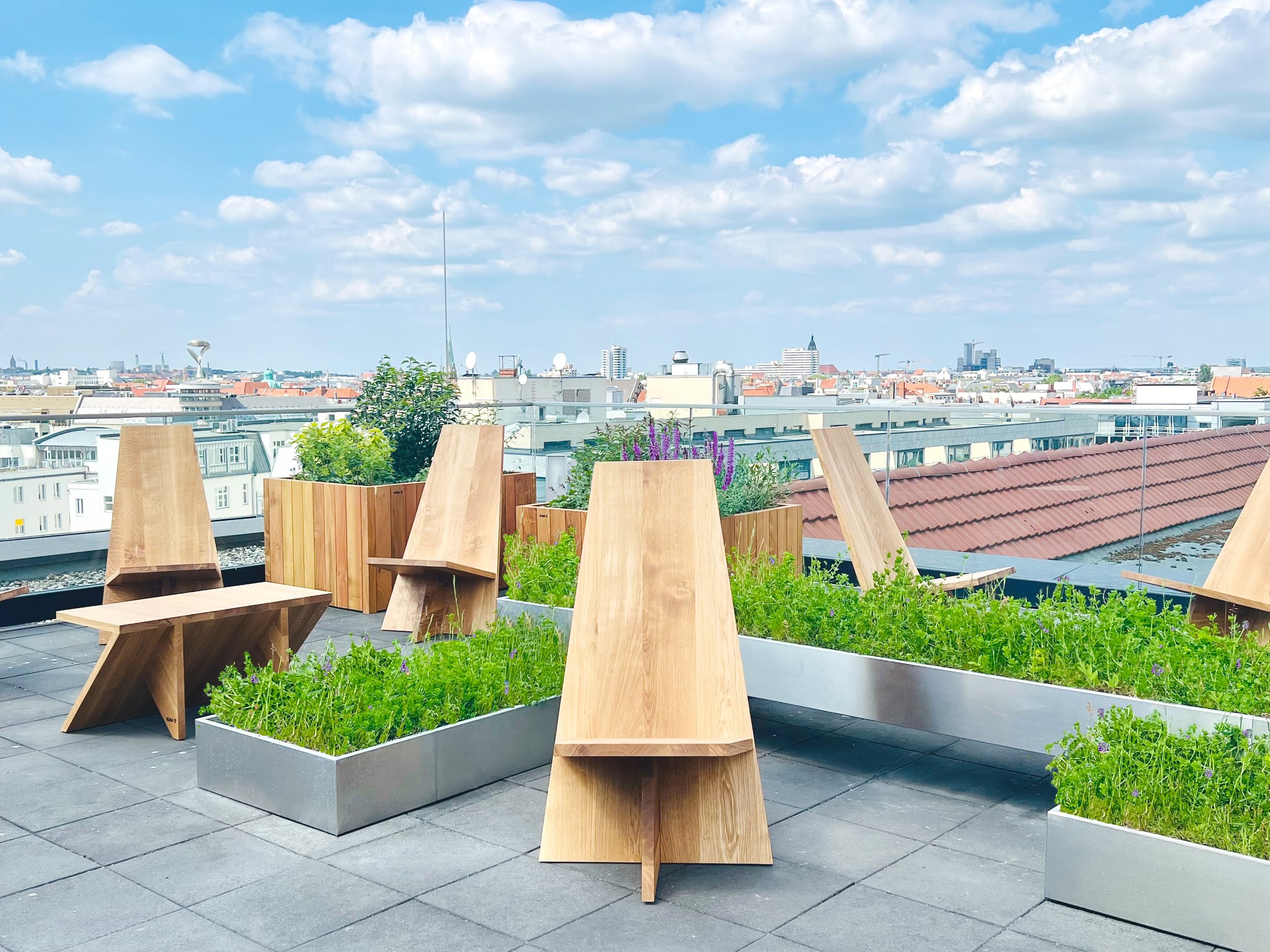
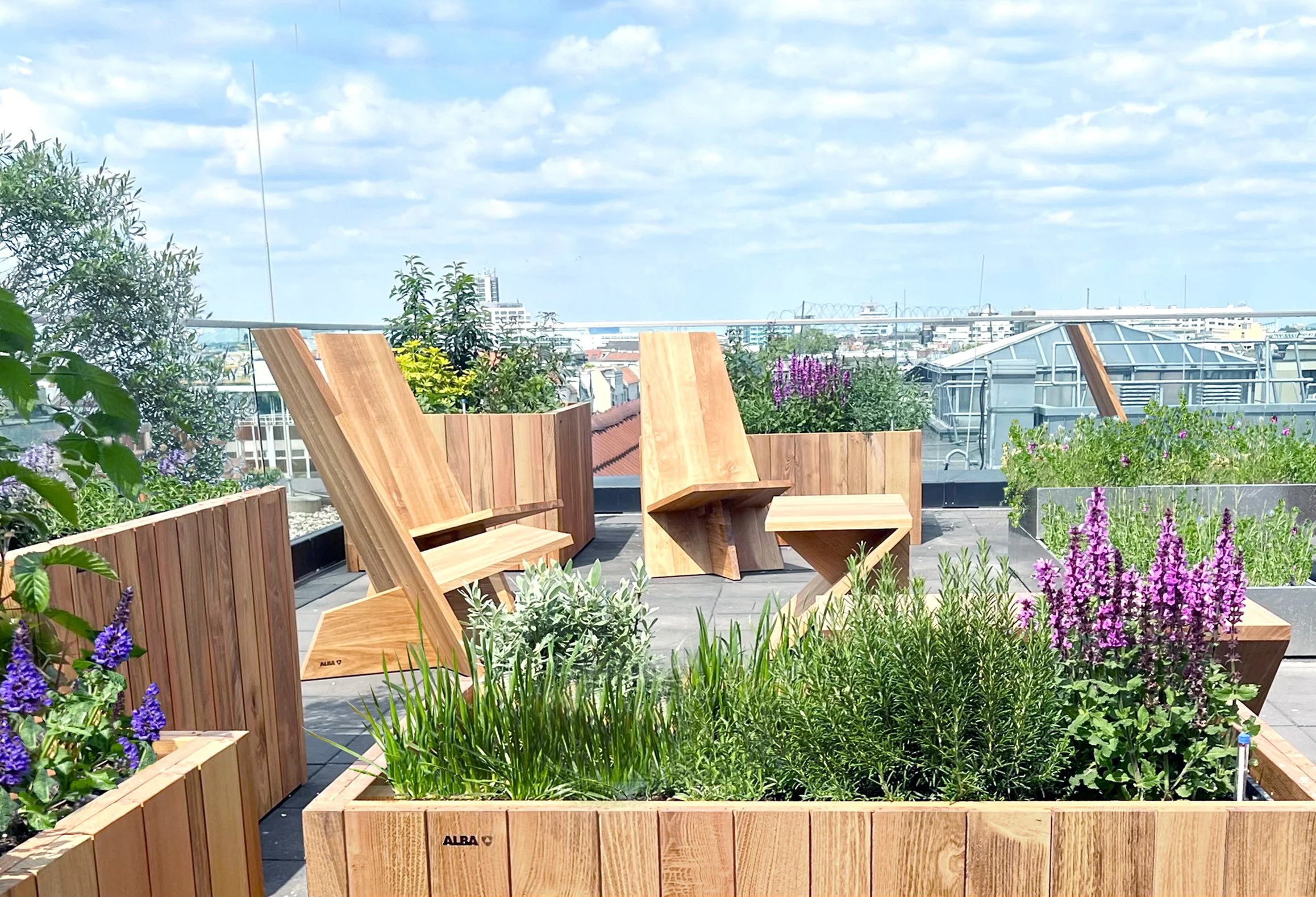
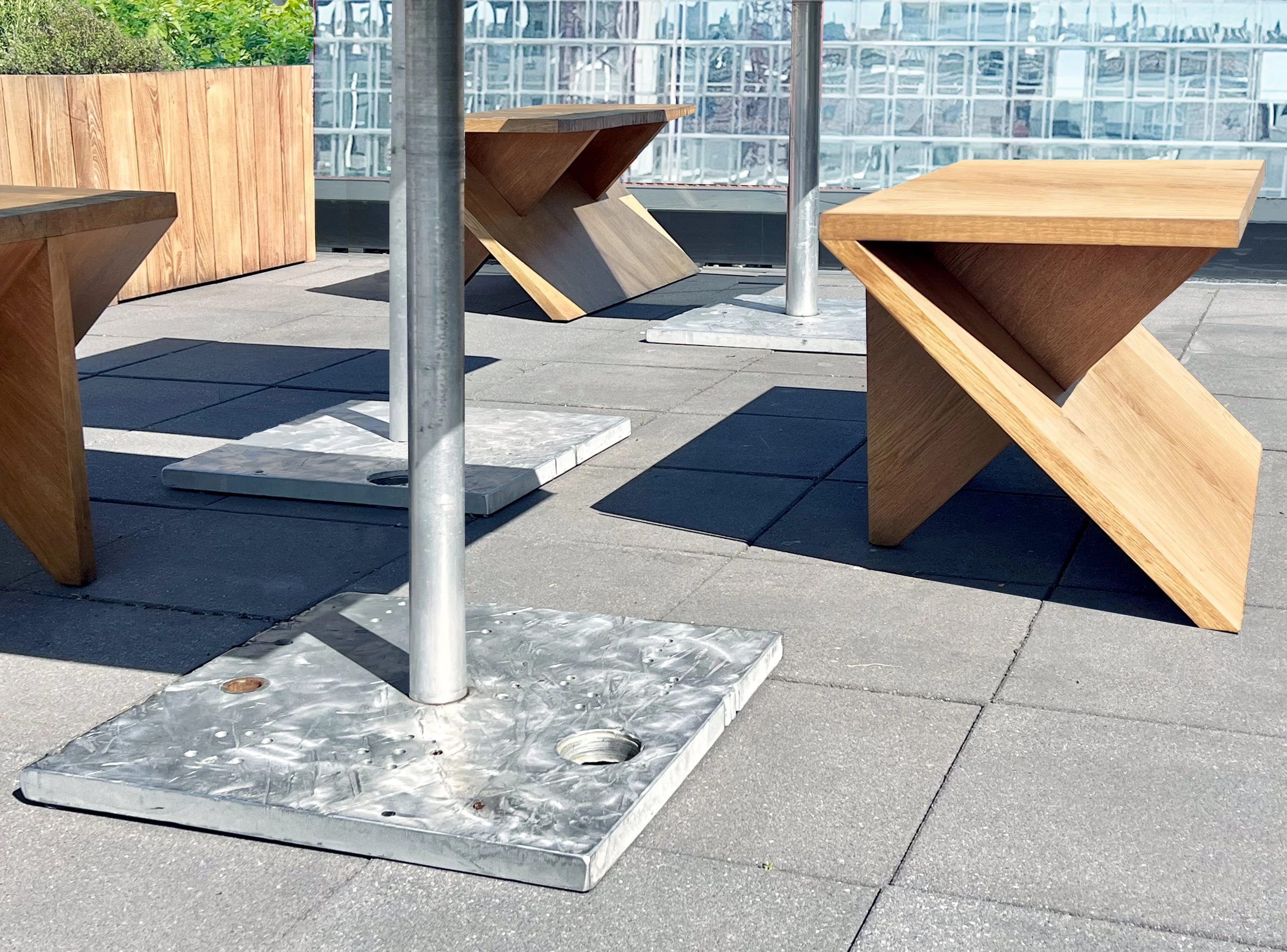
On the roof terrace on the 8th floor of ALBA's headquarters, a newly designed roof landscape invites all employees to enjoy a snack garden for people and a perennial garden for insects. Here, too, the furniture is made from recycled wood and recycled metal. The ALBA wooden armchairs and stools, familiar from the reception area, are scattered around. The stool chair is presented here in a double version. The raised beds are framed with recycled robinia wood from the ALBA timber yard. The centre of the green roof landscape is structured by a bridge-like metal construction made of three large recycled stainless steel tubs from the ALBA collection. A floating wildflower meadow grows inside. The arrangement of the elements allows for circulation without the mobile furniture precisely defining the ‘outdoor room’. The use of the same furniture as in the ALBA Lounge dissolves the boundary between indoor and outdoor space.
Healing and Wellbeing
The ALBA Lounge offers healing and wellbeing in the workplace in the form of light therapy to combat the blues of the dark winter months in Berlin. Now that employees are back at work after coronavirus and working from home, ALBA is keen to establish a healing, socially inclusive and natural atmosphere in the office environment.
Participation
Employees are invited to participate in a process of changing the Forest Curtain in the ALBA Lounge themselves according to their own needs by mooving the wooden curtains. Employees are also free to help themselves and harvest produce in the picking garden of the ‘Outdoor Room’.
Sustainability
The innovative design approach is to complement what already exists in a pointed way and thus recontextualise it. Recycling materials means that BUCHHOLZBERLIN and Peter Heimer use available materials from the ALBA recycling centres to create new forms. Recycled materials are reassembled in their raw state and not formally modified. Aluminium printing plates and heavy aluminium plates are used to create complete walls and bases for tables and tea trolleys. Scratches and signs of wear are preserved and become ornaments with a legible, internal company history. Later the plates can easily be used again.