Ravensburg Living, Germany, 2025

Design: Peter Heimer
Photography: Achim Hatzius
The former Hotel Waldhorn in the historic old town of Ravensburg has been closely linked to the town's history and the Bouley family, who ran it, for over a century.
After Albert Bouley's death, the family decided to close the hotel. The historic hotel rooms were converted into individual condominiums.
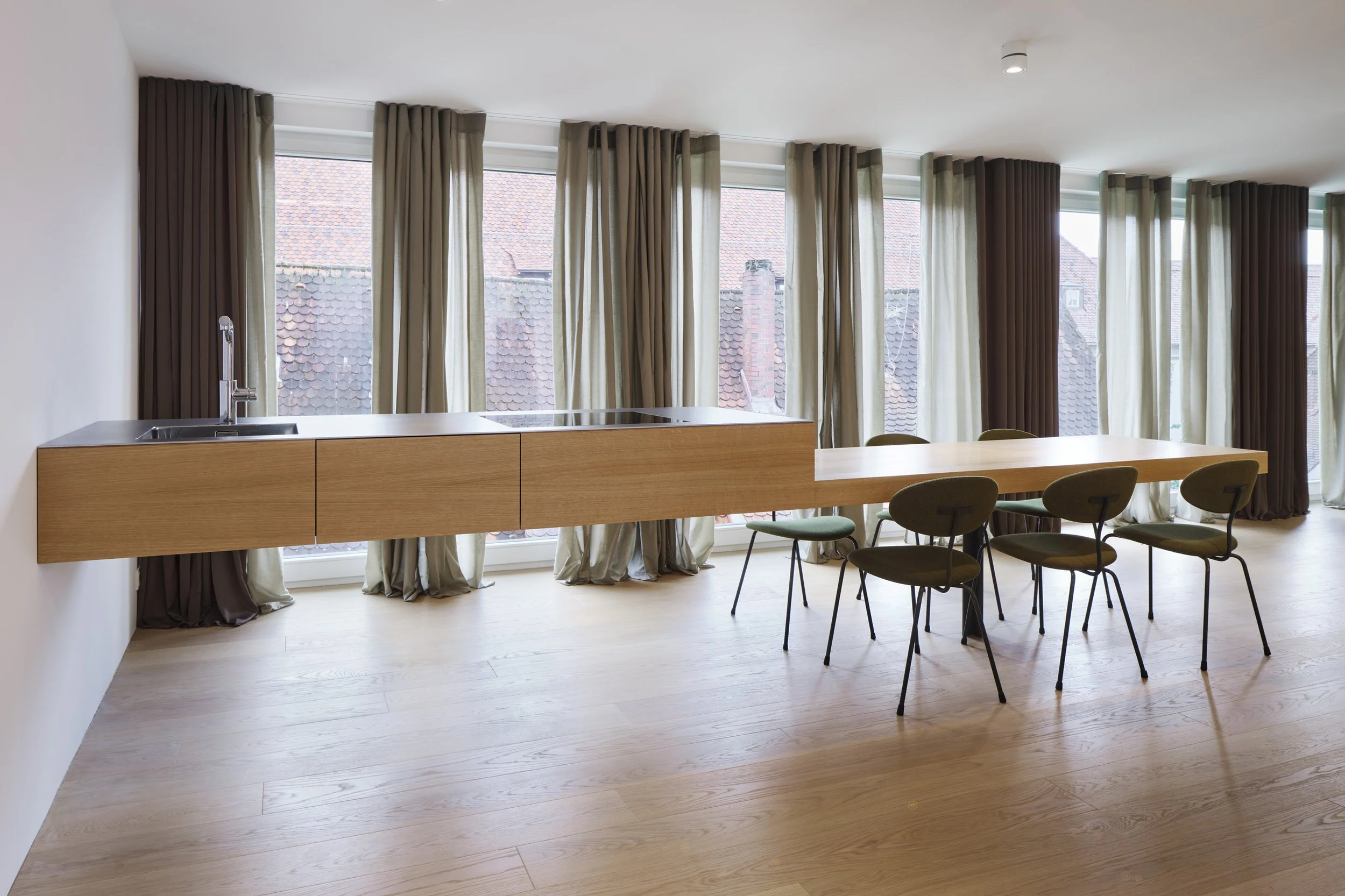
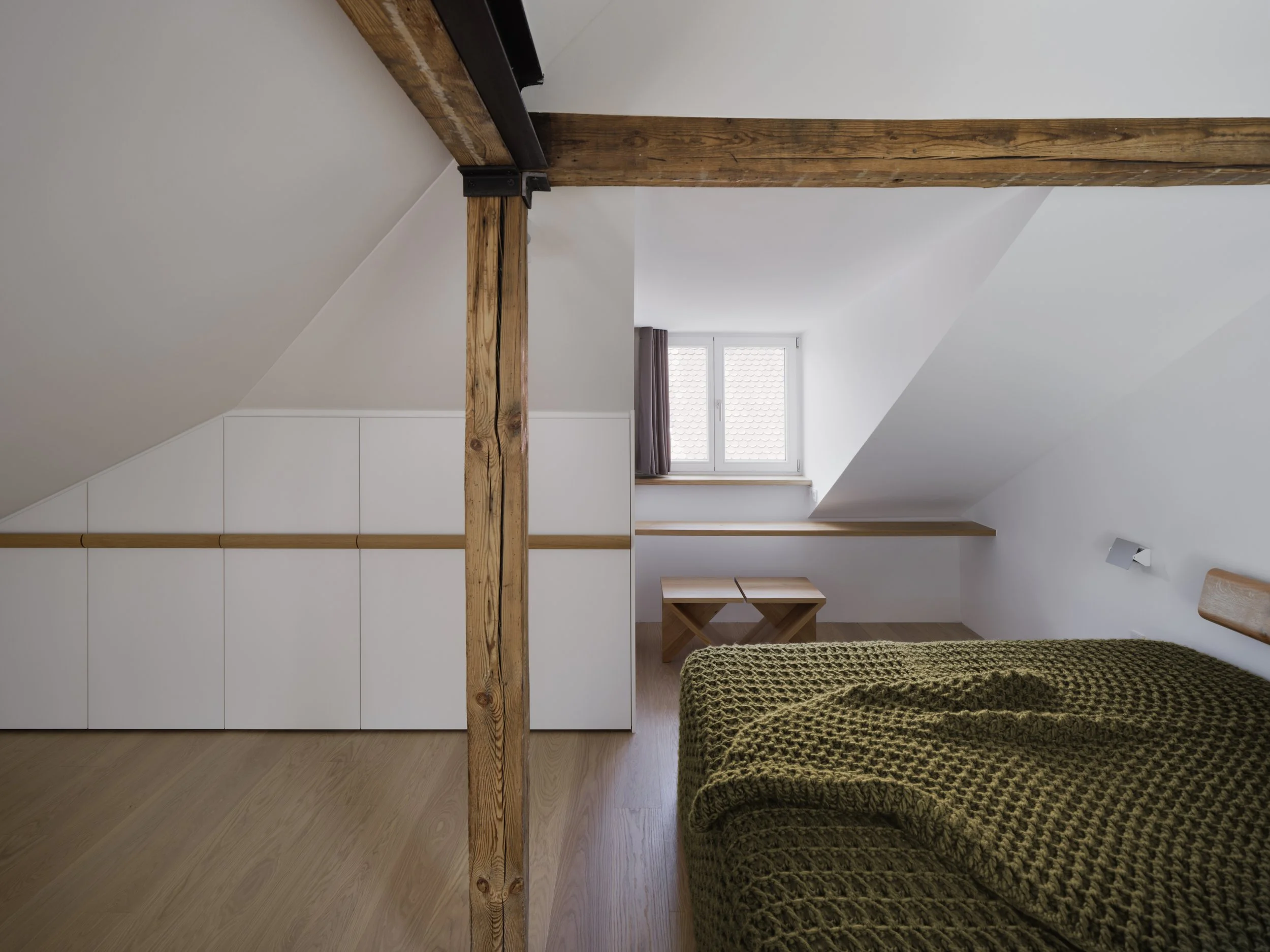
A very special flat was created in the attic: the ‘Storchennest’ (stork's nest). The former rooms of the hotel staff, with a view over the towers of the old town, were transformed into a spacious, light-flooded retreat, complemented by a large balcony extension.
The client is Hedi Bouley, herself a designer and owner of the textile upcycling label LPJ Studios.
While Peter Heimer designed the floor plan, the lighting concept, the built-in furniture and solid wood furniture, Bouley was responsible for the textile elements – curtains, fabrics and surfaces.
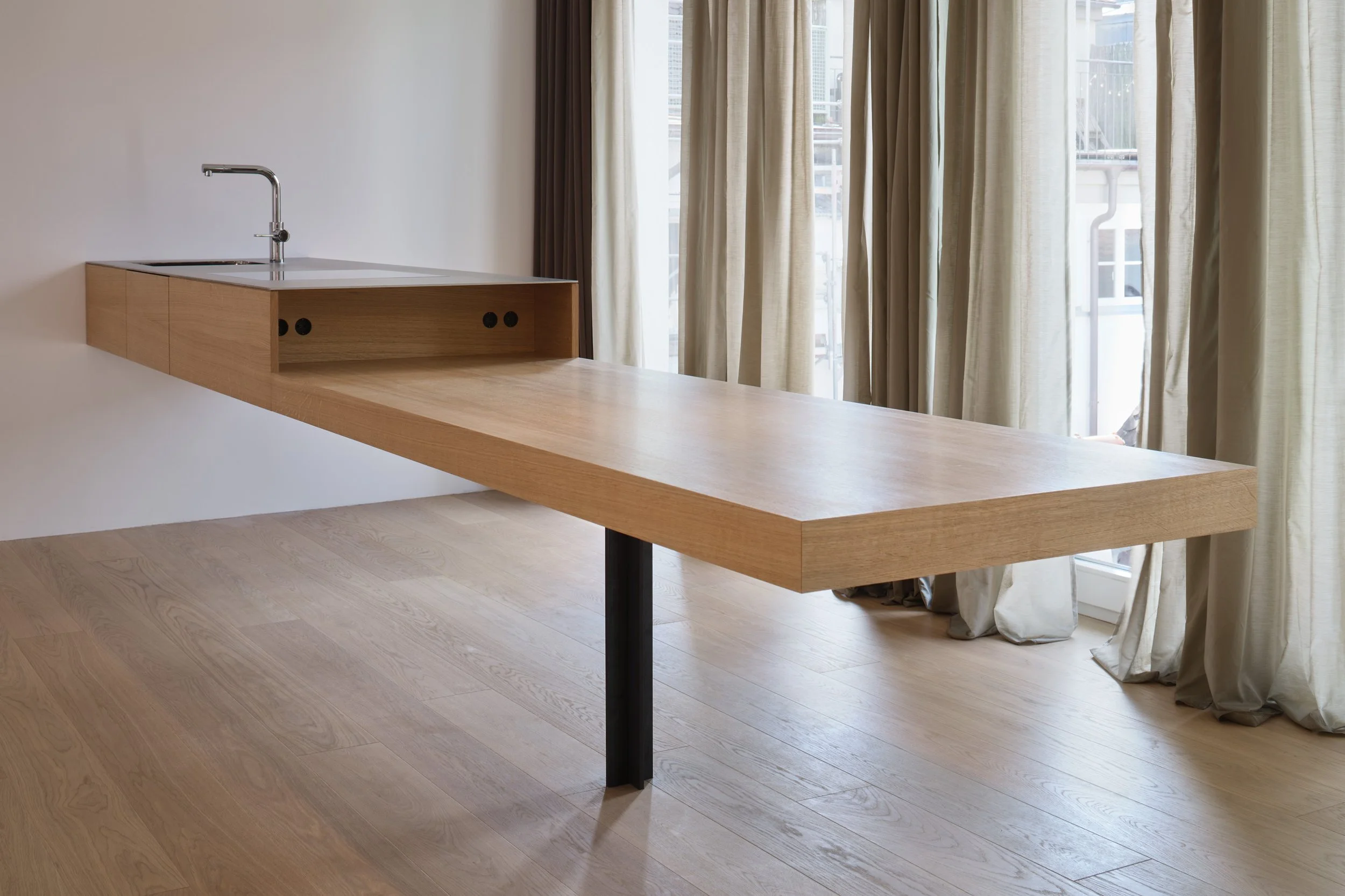
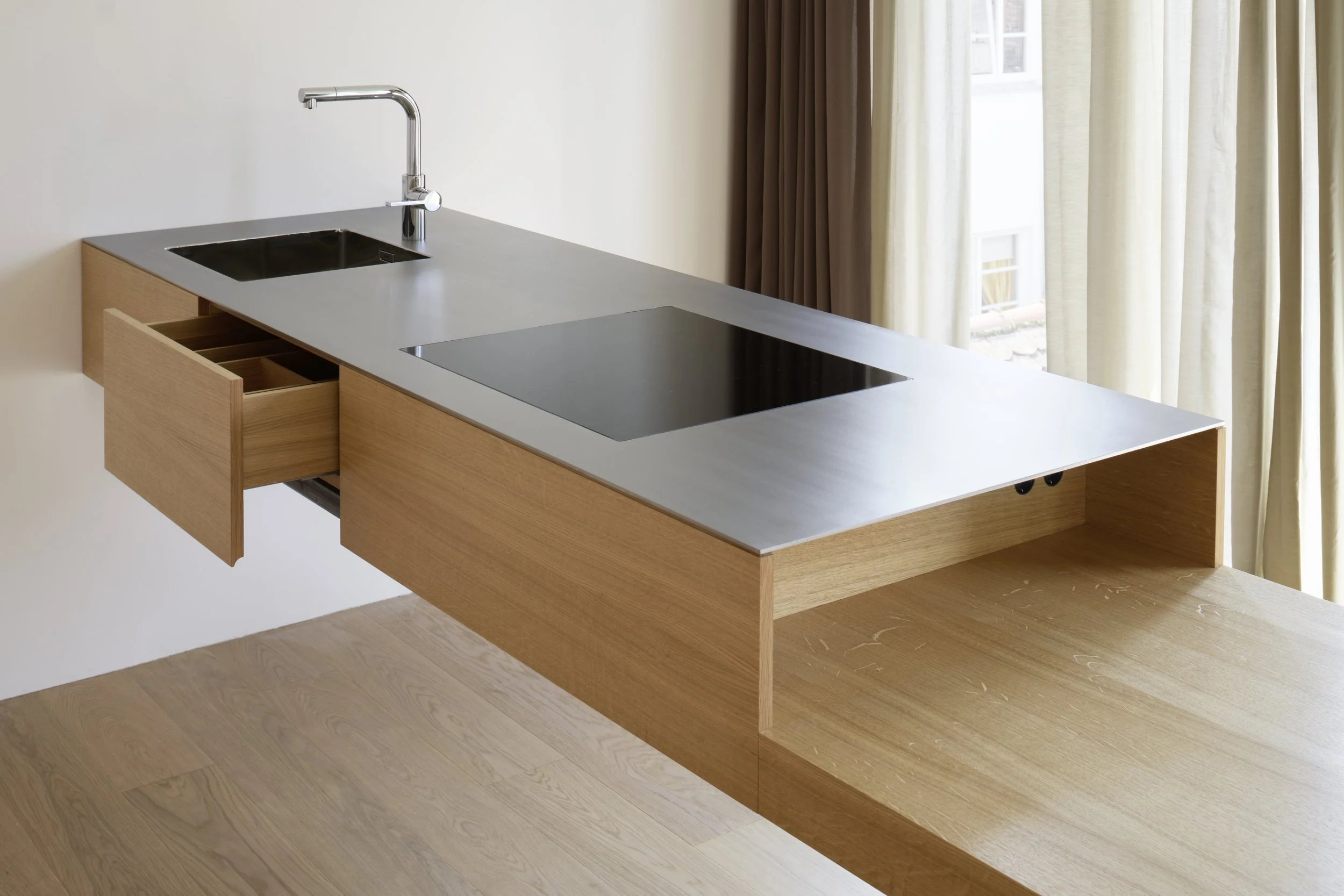
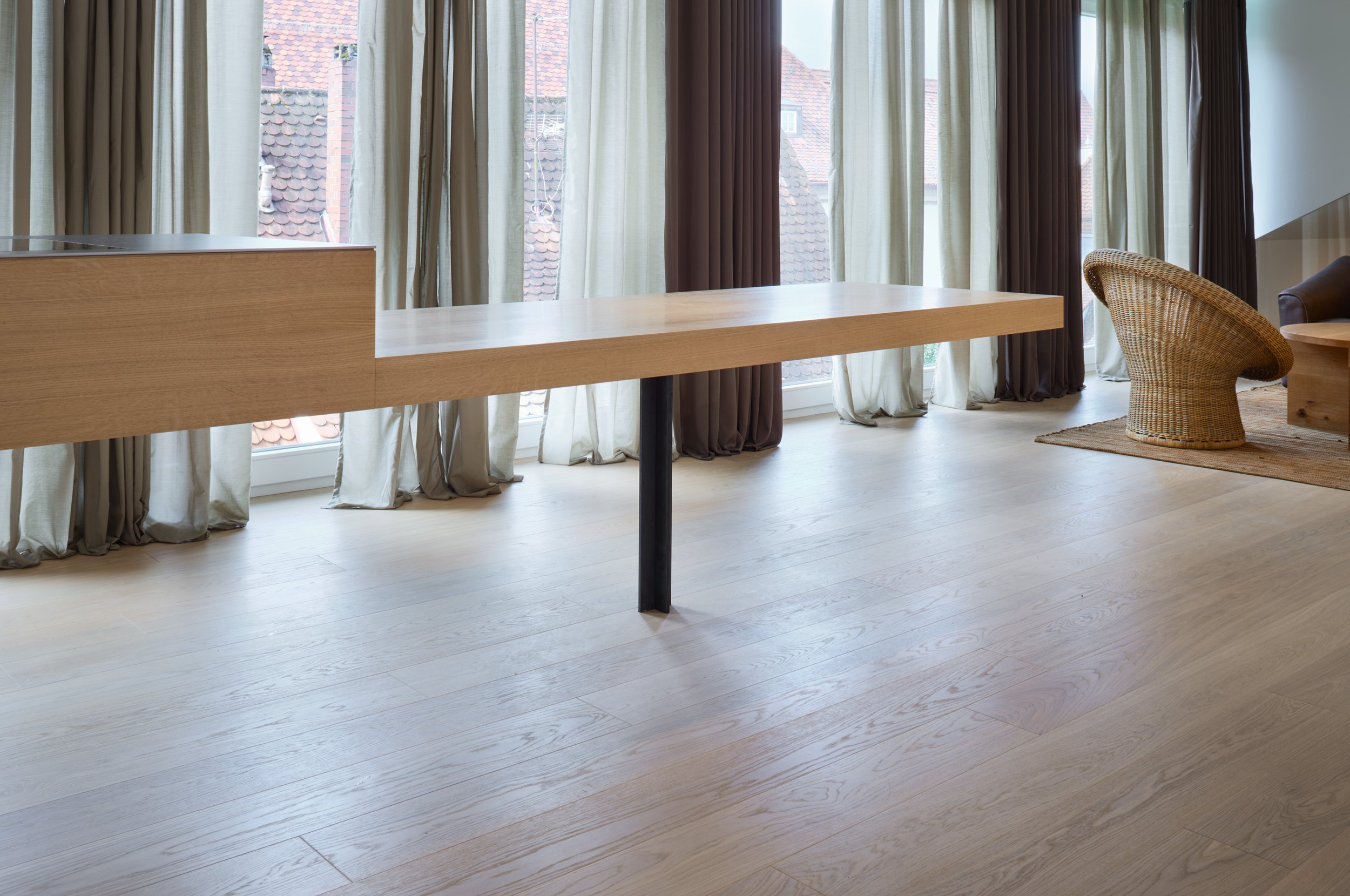
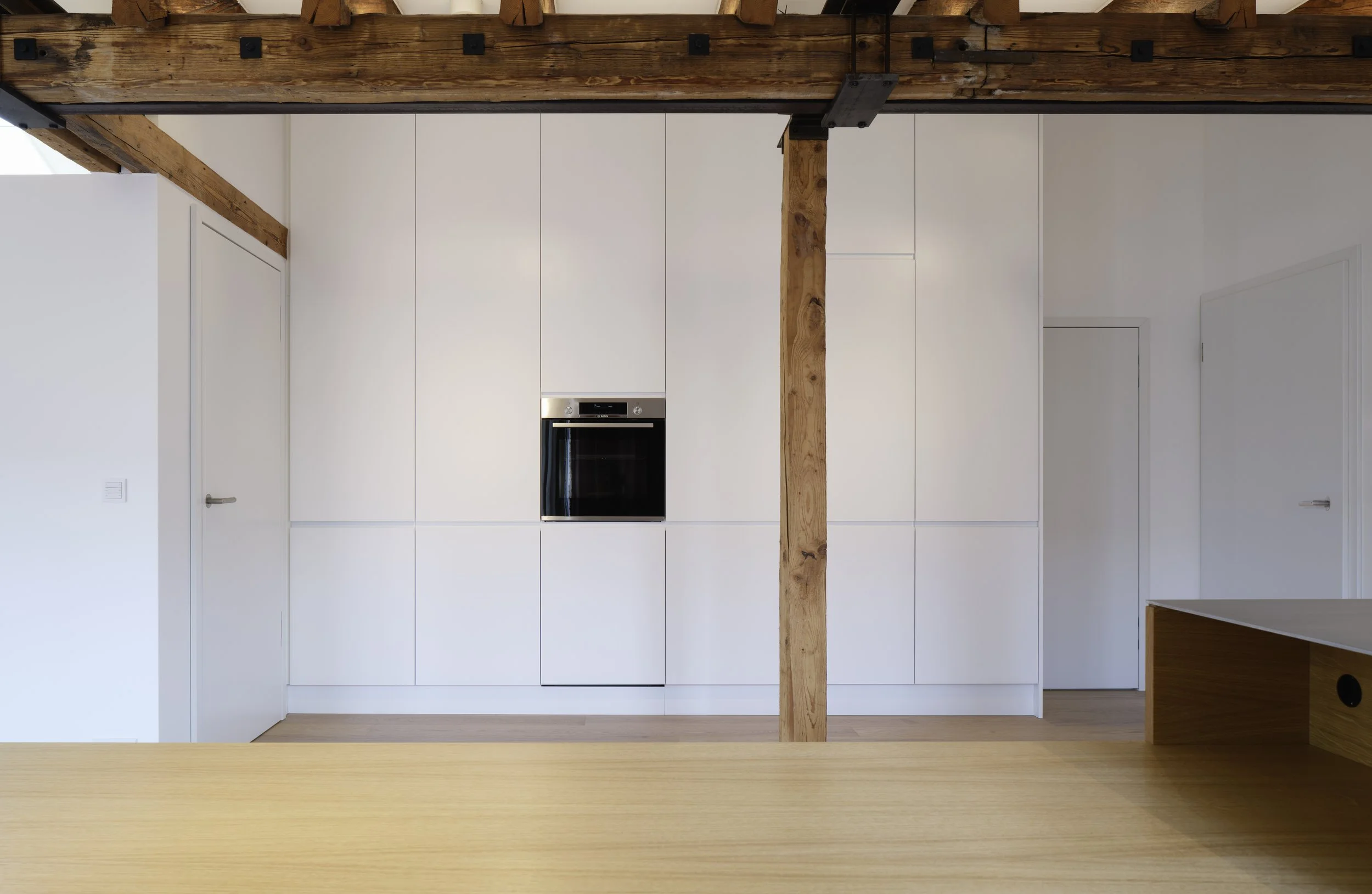
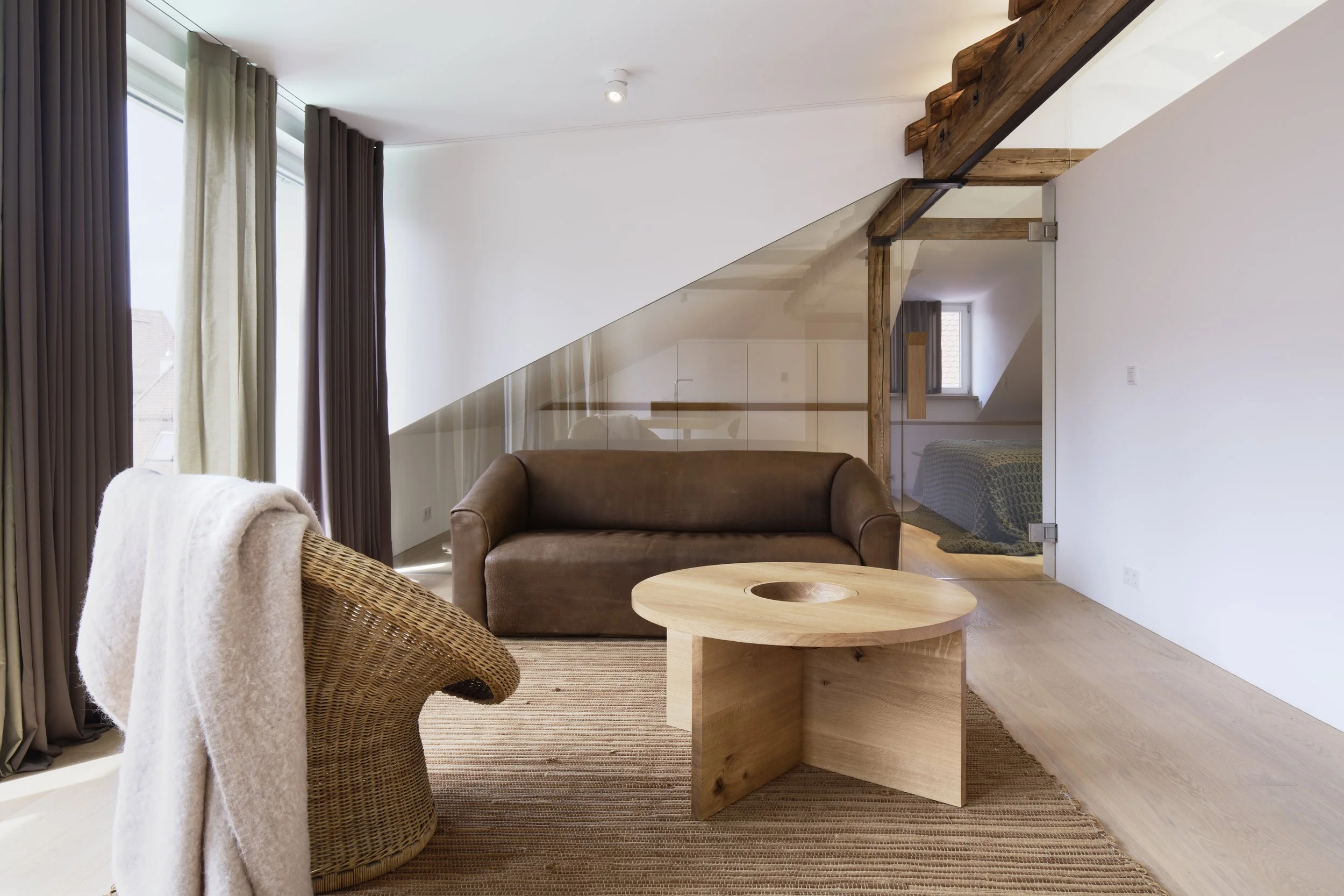
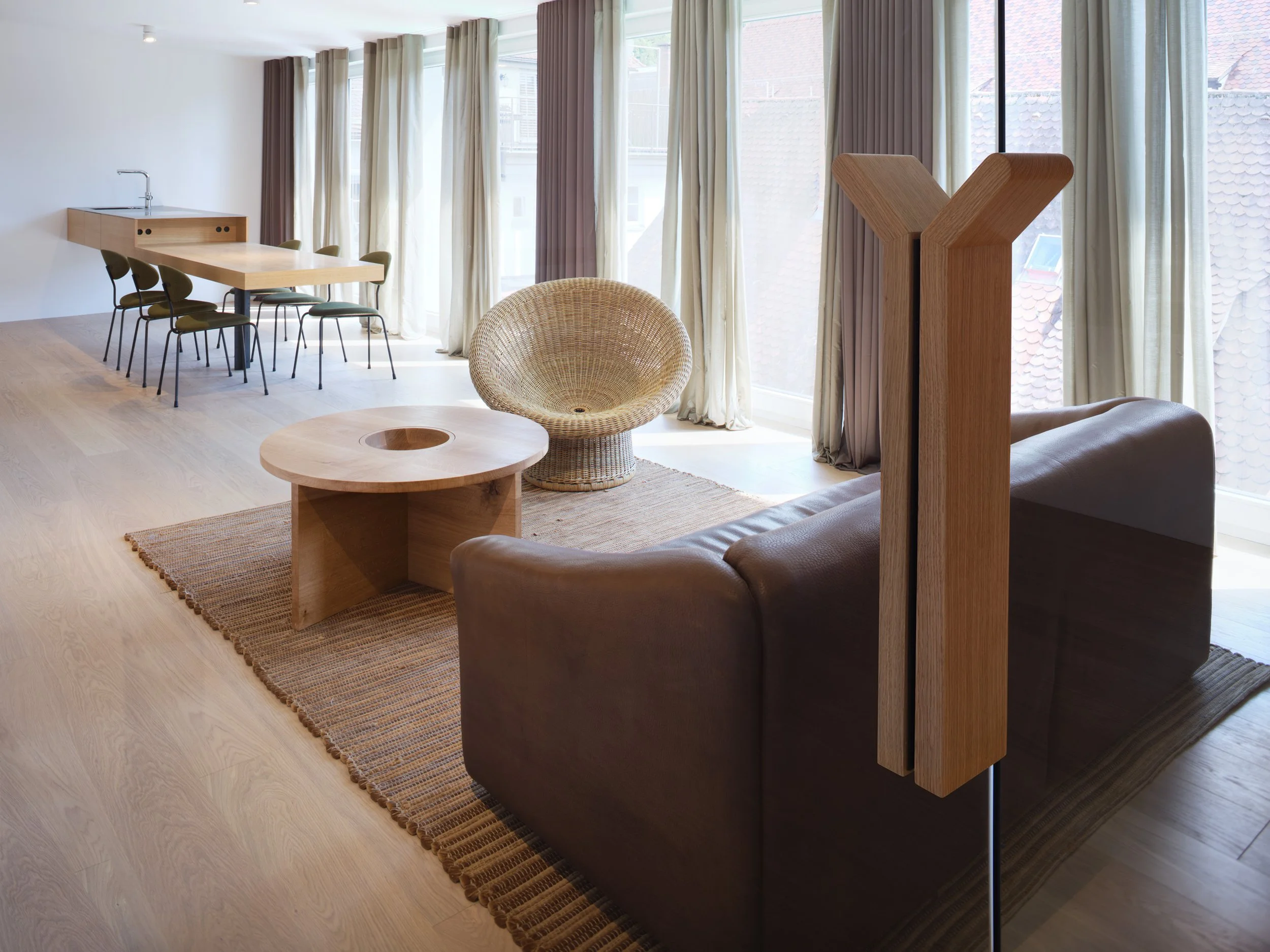
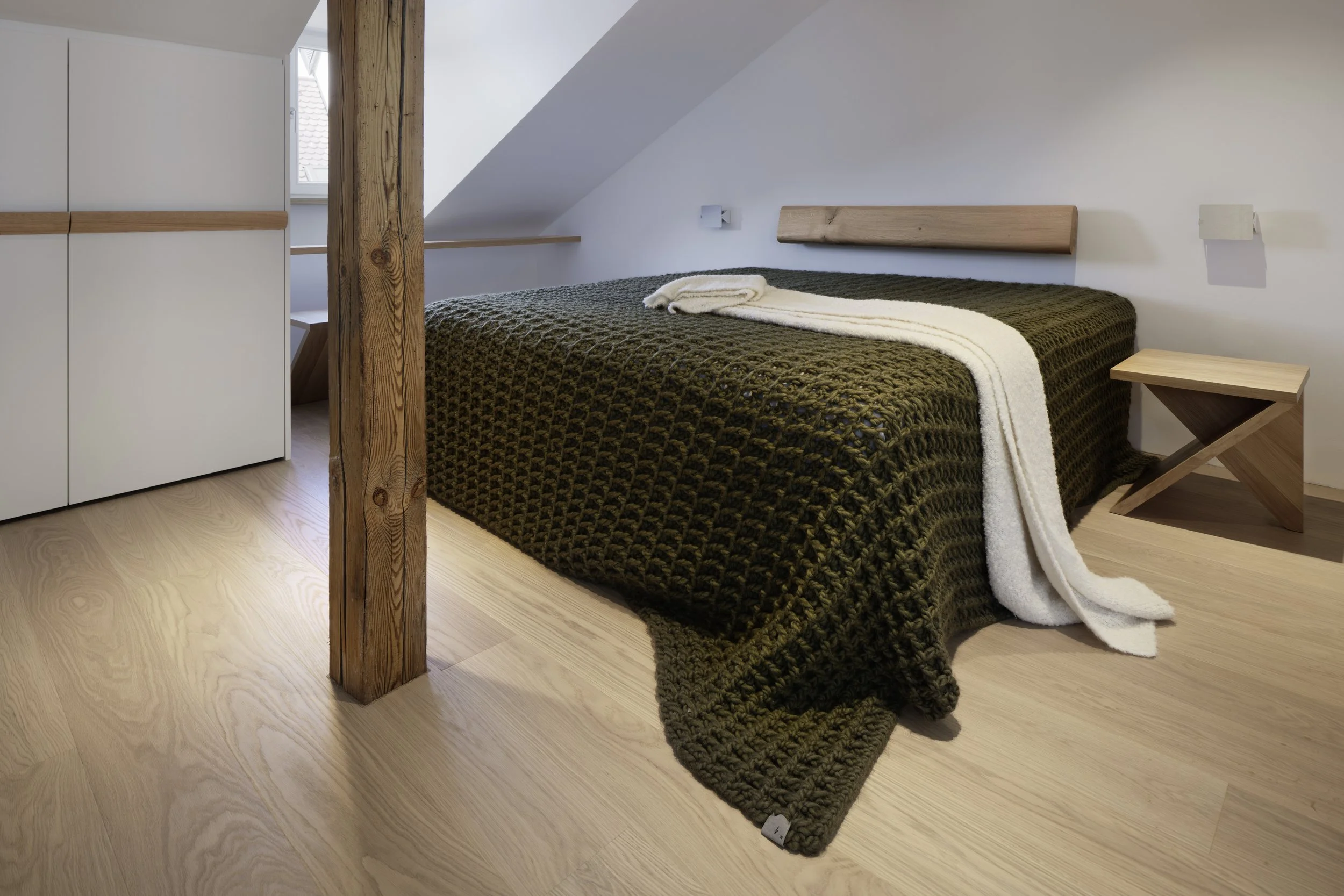
The flat thrives on exciting contrasts: light and transparency meet the venerable beams of the old roof construction. Understated, white built-in furniture dialogues with expressive, sculptural elements made of solid oak. A particular highlight is the striking kitchen and dining counter, ‘Der Storch steht gern auf einem Bein’ (The stork likes to stand on one leg), a humorous reference to the name of the flat and, at the same time, a defining design element of the room.
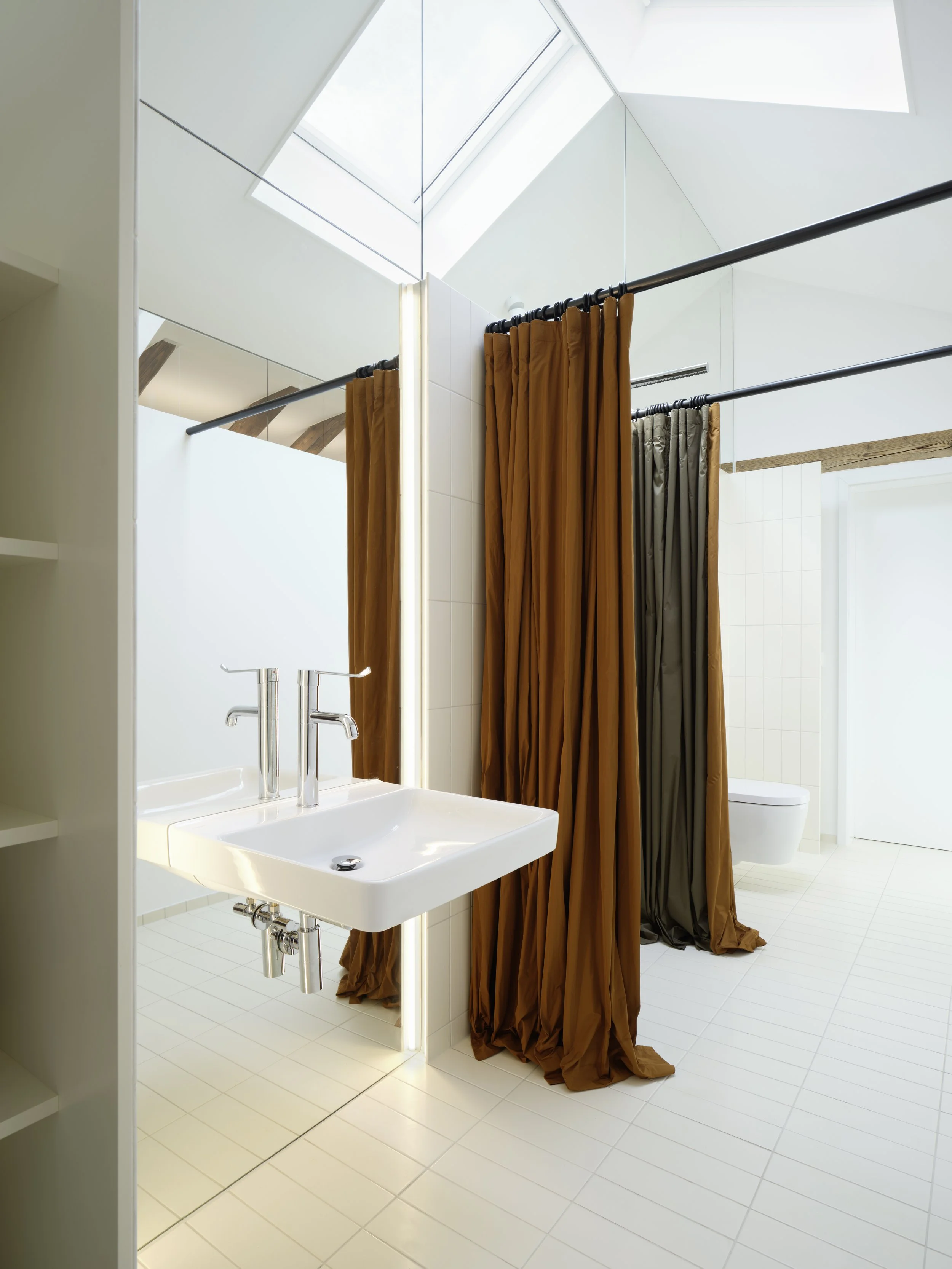
Transparent glass walls between the living, sleeping and bathroom areas create a sense of spaciousness and visual clarity, supported by a very special lighting choreography: a 5.5-metre-high mirrored wall in the bathroom inside the apartment reflects daylight through glass walls and rooms.
In front of this mirrored wall is a low, tiled wall in the form of two paravents.
The paravents conceal shelves integrated into the two corners of the room for all bathroom utensils.
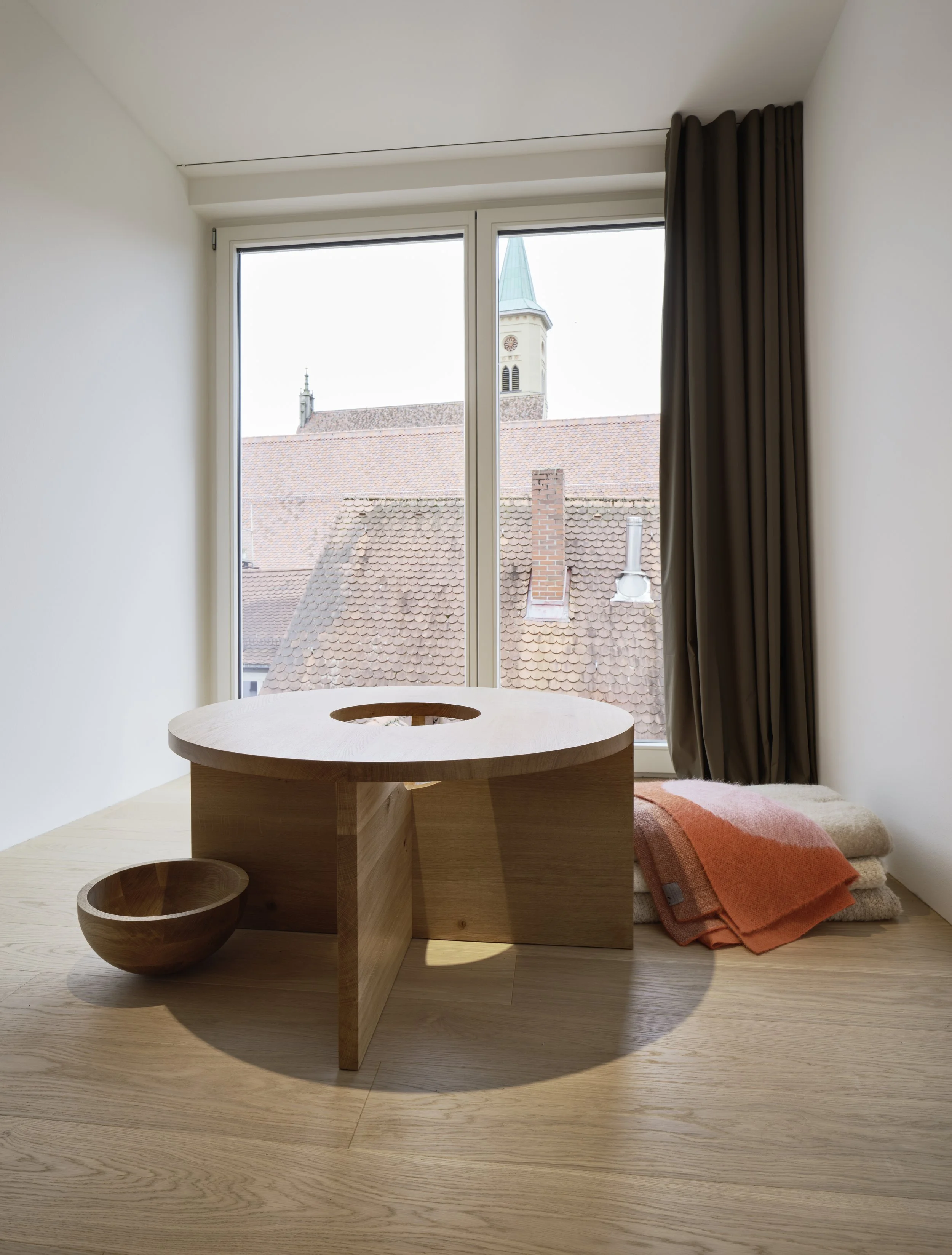
The custom-made built-in furniture is complemented by unique handcrafted pieces designed by Peter Heimer for the Storchennest and manufactured by BUCHHOLZBERLIN:
a wooden door handle on the glass door to the bedroom, a bed backrest and a coffee table with a removable wooden shell.